
💰 Quick Context: The Ghanaian Cedi
Ghana uses the Ghanaian Cedi (GHS / GH₵). The cedi has experienced significant depreciation in recent years, so always check the current rate before your trip. A coffee costs GH₵15–40, a restaurant meal GH₵40–150, and a hotel night GH₵200–1,500. Quick math: roughly 15 GHS = $1 USD. Think "divide by 15" or "GH₵100 is about $6.50." Ghana is predominantly cash-based. Accra has growing card acceptance at hotels and malls, but Cape Coast, Kumasi, and rural areas are largely cash-only.
🎧 Order Ghanaian Cedi Before You Fly
Have cash in hand when you land. Insured delivery, 2–5 day shipping.
Order GHS → CEI Currency ExchangeCash vs. Card: What to Expect in Ghana
Ghana is a cash-first country. While Accra's modern hotels, malls, and upscale restaurants increasingly accept cards, most everyday transactions require cash. Outside of Accra, card acceptance drops off quickly.
Cards work at hotels, Accra Mall, West Hills Mall, upscale restaurants in Osu and East Legon, and some tour operators. Cash is needed for tro-tros (shared minibuses), taxis, most restaurants, Makola Market, craft vendors, Cape Coast Castle entrance fees, and smaller hotels and guesthouses. Cape Coast and Kumasi have very limited card acceptance; plan for cash for nearly everything.
Carry GH₵500–1,000 to start. Withdraw more as needed from GCB or Ecobank ATMs in major cities.
How to Get Cedis for Your Ghana Trip
Ghana is a cash-first economy with notable currency volatility (the cedi has been one of West Africa's more rapidly devaluing currencies). Cards work at Accra Mall and West Hills Mall, the Movenpick and Kempinski hotels, upscale Osu and East Legon restaurants, and some tour operators. Everywhere else (the Makola Market, every tro-tro shared-minibus terminal, Cape Coast Castle entrance fees, Kumasi's Kejetia Market, every craft vendor, every taxi negotiation) is cash. The Ghanaian cedi is also a closed currency for export purposes: most US currency-exchange services and home banks do not stock GHS. Plan to bring USD or pull cedis from a major Ghanaian bank ATM.
Bring USD or order cedis before you fly
For pre-arrival GHS, two paths. A currency-exchange service like CEI Currency Exchange may stock cedis on request, with insured 2–5 day delivery (confirm before ordering). Most US home banks (Bank of America, Chase, Wells Fargo, Citi) generally do not stock GHS. Backup that works well in Ghana: pack USD $300–500 in clean post-2009 $50s and $100s and exchange at a Ghana bank counter or licensed forex bureau on landing. Ghana-specific correction: Absa Bank Ghana is not a Bank of America Global ATM Alliance partner. That relationship belonged to Barclays and ended when Absa left the alliance in 2018, so a BoA card carries its flat non-network fee plus 3% at every Ghanaian machine. The cleanest setup for most Ghana trips: pack USD $300–500 in clean bills for tour deposits and as exchange backup; use a Wise card at the Accra mall and upscale-restaurant tier; and pull cedis from Absa Ghana ATMs for daily cash.
Withdraw from a Ghanaian bank ATM
On the ground, the cheapest source of cedis is a major Ghanaian bank ATM. GCB Bank, Ecobank Ghana, Stanbic Bank Ghana, Standard Chartered Ghana, and Absa Bank Ghana all give the actual interbank rate with no markup. Most charge a per-transaction operator fee for foreign cards (typically GH¢15–30, posted on the screen before you confirm). Withdrawal limits run roughly GH¢1,000–2,000 per transaction. Two procedural rules: stick to ATMs inside bank branches in Accra (East Legon, Osu, Airport City) and Kumasi, in major shopping malls (Accra Mall, West Hills, Marina Mall), or at major hotels. Avoid the standalone independent ATMs at smaller hotel arcades. And decline DCC every time the screen offers "charge in USD". See the Best ATMs section below for the bank-by-bank lineup. Want to know what an Absa Ghana withdrawal will actually cost on your card? Drop it into our ATM fee calculator.
Airport counters & forex bureau touts
Three traps to walk past in Ghana. The currency-exchange counters in arrivals at ACC (Kotoka International) advertise rates that look reasonable but routinely run 5–10% off the interbank rate. The licensed forex bureaux around Osu's Oxford Street, near the Accra Mall, and along the Spintex Road typically offer better rates than the airport for USD-to-GHS exchange, with spreads of 1–3% off the interbank rate; Ho-Sky Forex and Continental Forex Bureau are widely used by expats. The unlicensed touts near Makola Market and around the Cape Coast Castle area use the "no commission" framing while baking the markup into the rate. Third, the standalone independent ATMs at smaller hotel arcades layer DCC pitches and operator fees on top. Stick to bank-branded ATMs at Absa Ghana, GCB, Ecobank, Stanbic, or Standard Chartered; decline DCC; and licensed Osu-area forex bureaux are the one acceptable cash-to-cash route. Ghana does not yet have a city-specific guide on this site, but the Best ATMs section below covers the bank lineup.
For a side-by-side comparison of every method (bank wire, travel card, pre-order, ATM, exchange counter) including USD-to-GHS timing tips, see our complete Getting Currency guide →.
Best ATMs to Use in Ghana
Ghana's major banks operate ATMs across the country. ATM withdrawal limits are typically GH₵1,000–2,000 per transaction. Your home bank may charge a foreign transaction fee. Always choose GHS when prompted.
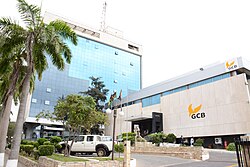
GCB Bank (Ghana Commercial Bank)
Ghana's largest bank with the widest ATM network. You will find GCB ATMs in Accra, Kumasi, Cape Coast, Tamale, and most regional capitals. Available at Kotoka International Airport arrivals.
Recommended
Ecobank Ghana
Pan-African bank with modern ATMs and good foreign card acceptance. Ecobank machines are found across Accra, major cities, and at Kotoka International Airport. Reliable English-language interfaces.
Recommended
Stanbic Bank Ghana
Part of the Standard Bank Group, with reliable international card acceptance. ATMs are available in Accra and other major cities. A solid choice for Visa and Mastercard withdrawals.
Recommended⚠ Watch Out for Dynamic Currency Conversion (DCC)
DCC is rare in Ghana but can occur at some ATMs, particularly at Kotoka Airport and in Osu. If an ATM or card terminal offers to charge you in USD instead of GHS, always decline. Choosing USD means accepting a 3–8% markup hidden in their exchange rate. Always select "GHS" or "local currency" at every prompt.
ATMs to Avoid in Ghana
Standalone, unbranded ATMs can be found in some commercial areas. These machines may charge extra fees or have reliability issues. Stick to the bank ATMs listed above for the best experience.
Standalone Unbranded ATMs
Unbranded machines in shops or commercial areas may charge additional fees and are more prone to technical issues. They may also have lower withdrawal limits. Walk to the nearest GCB or Ecobank ATM instead.
AvoidPaying by Card in Ghana
Card Networks
Visa and Mastercard are accepted at upscale hotels, Accra Mall, West Hills Mall, and some restaurants in Osu and East Legon. Coverage is limited outside the capital. American Express has very limited acceptance. Discover is not accepted in Ghana.
Contactless & Mobile Payments
Contactless payments are rare, even in Accra. Do not count on tap-to-pay. Apple Pay and Google Pay are not widely supported at Ghanaian terminals. MTN Mobile Money (MoMo) is how locals pay for everything, from taxis to market purchases. However, tourists typically cannot use it since it requires a Ghanaian SIM card and in-person registration at an MTN office.
Where Cards Will Not Work
Tro-tros (Ghana's most common public transport) are strictly cash-only. Taxis: all fares are negotiated and paid in cash. Makola Market in Accra, Kejetia Market in Kumasi, and all open-air markets are cash-only. Cape Coast and Elmina: castle entrance fees and nearly all businesses require cash. Street food and local restaurants (chop bars) are cash only across the country.
Tipping in Ghana
Tipping Guide
Tipping is not strongly expected but is appreciated. Service charges are not typically included. At upscale restaurants in Osu and East Legon, 10% is generous. At chop bars (casual eateries), no tip expected; rounding up is a nice touch. Hotel porters: GH₵5–10 per bag. Tour guides at Cape Coast Castle, Kakum National Park, or Mole National Park: GH₵50–100 per day for a knowledgeable guide. Taxis: no tip expected, but rounding up is appreciated.
Accra, Cape Coast & Kumasi: Practical Money Tips
Things to Know
For city-specific tips, see our Accra money guide covering Osu ATMs, Makola Market cash tips, and mobile money advice.
The cedi has depreciated significantly in recent years. Always check the current exchange rate before your trip. Rates in older guidebooks may be outdated. USD cash is useful backup: exchange at licensed "forex bureau" offices throughout Ghana. Avoid street changers, who may offer poor rates or counterfeit notes.
Accra's Osu and East Legon have the best card acceptance in the country. Cape Coast and Elmina: very cash-dependent. Withdraw what you need before heading to the castles. Kumasi: Kejetia Market (the new, massive structure) is West Africa's largest market and entirely cash-based. GCB and Ecobank ATMs are in the city centre.
Kotoka International Airport (ACC) has GCB and Ecobank ATMs in arrivals. Use these to withdraw cedis immediately on arrival. English is Ghana's official language, making money transactions straightforward. The people are famously welcoming, and Ghana is one of West Africa's most visited countries.
Money Safety in Ghana
Staying Safe
Ghana is generally safe, but be cautious in crowded market areas like Makola (Accra) and Kejetia (Kumasi) where pickpockets operate. Use hotel safes for extra cash and carry only what you need for the day.
Avoid street money changers. Use licensed forex bureaus (look for official signage) or GCB and Ecobank ATMs for the best rates. Ghana is an uncommon enough destination that some card issuers flag transactions. Mention "Ghana" specifically when notifying your bank to prevent fraud holds. Carry a backup card on a different network since ATM issues do occur in a cash-dependent country.

Skip the Foreign Transaction Fees
The Wise card converts your money at the real mid-market exchange rate. No markups, no surprises. Spend Ghanaian cedis like a local.
Get the Wise Card →Frequently Asked Questions
Is Ghana a cash-only country?
Mostly. Cards work at some hotels, malls, and upscale restaurants in Accra (Osu, East Legon), but the vast majority of daily transactions require cash. Tro-tros, taxis, markets, and local restaurants are all cash-only.
What is MTN Mobile Money (MoMo)?
MoMo is Ghana's dominant mobile payment system, used by locals for everything from taxi fares to market purchases. Tourists typically cannot use it since it requires a Ghanaian SIM card and in-person registration at an MTN office.
Should I bring USD to Ghana?
Yes, as backup. USD can be exchanged at licensed forex bureaus in Accra, Kumasi, and Cape Coast. Bring clean, newer-series bills. Bank ATMs give fair rates too, but having some USD cash provides extra security in case of ATM issues.
Do I need cash for Cape Coast Castle?
Yes. Castle entrance fees and nearly all businesses in Cape Coast and Elmina require cash. Withdraw enough cedis in Accra or at ATMs in Cape Coast town before visiting the historical sites.
Is tipping expected in Ghana?
Not strongly, but appreciated. 10% at upscale restaurants is generous. Chop bar (local eatery) meals do not require tips. Tour guides at Cape Coast Castle and Kakum National Park appreciate GH₵50–100 per day.
Is Ghana safe for tourists?
Generally yes. Ghana is one of West Africa's most stable and welcoming countries. The main risk is petty theft in crowded markets (Makola, Kejetia). Use hotel safes and carry only what you need.
Quick Comparison
| Method | Cost | Convenience | Best For |
|---|---|---|---|
| Ghanaian bank ATMs (GCB, Ecobank, Stanbic) | Low (fair rate, possible home bank fee) | ★★★★★ | Primary source of cedis for all spending |
| No-FX-fee card at hotels/malls | Best (no fees, mid-market rate) | ★★★☆☆ | Accra hotels, malls, upscale restaurants |
| Licensed forex bureaus (USD cash) | Moderate (2–5% spread) | ★★★★☆ | Backup option, exchanging USD for cedis |
| Airport exchange counters | High (5–12% markup) | ★★☆☆☆ | Absolute emergency only |
Ghana Quick Facts
| Currency | Ghanaian Cedi (GHS / GH₵). Roughly 15 GHS = $1 USD (check current rate) |
| Cash vs. Card | Predominantly cash-based. Cards work at Accra hotels and malls only |
| Best ATMs | GCB Bank, Ecobank Ghana, Stanbic Bank Ghana |
| Contactless | Rare, even in Accra. Do not rely on tap-to-pay |
| Card Acceptance | Limited to Accra hotels, malls, and upscale restaurants. Cash-only elsewhere |
| Tipping | 10% at upscale restaurants, not mandatory. GH₵50–100/day for tour guides |
| DCC Risk | Rare but possible. Always choose GHS |
| Best Strategy | Bank ATM cash for most spending. Bring USD as backup for forex bureaus |
Ghana City Guides
Neighborhood-level money guides for Ghana's top destinations. Where to find ATMs, which areas need cash, how to pay for transport, and more.